
 فارسی
فارسی
 english

Finding a reliable way to move funds across borders when sanctions are in place is stressful. If you are figuring out how to send money from Iran to Canada, the direct answer is that standard bank transfers do not work. You cannot use Swift directly from Tehran. The only secure method in 2026 is using a licensed exchange, known as a Sarafi, like Sarafi Havale. They act as a safe bridge. You pay them Rials in Iran, and they send Canadian Dollars to your bank from a secure third country. This article explains the steps, rules, and safety tips you need to know.
For immediate assistance and to check today’s rates, you can contact the support team at Sarafi Havale.
| Method | Best For | Speed | Safety Level | Key Risk |
|---|---|---|---|---|
| Licensed Sarafi | Large amounts, tuition, family support | 1–3 days | High–Very High | Delay or freeze if documents incomplete |
| Cryptocurrency (USDT) | Small transfers, tech-savvy users | Minutes–hours | Medium | Exchange freeze, user error |
| Cash Carry | Emergency only | Instant | Low (systemic) | Seizure, loss, declaration limits |
| Street Hawala | ❌ Not recommended | Uncertain | Very Low | Account closure, fraud |
| Direct Bank Transfer | ❌ Impossible | — | — | Sanctions block |
Know More About Sending Money from Iran to Canada
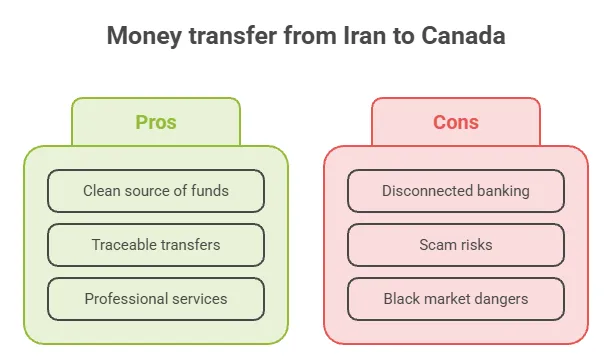
The financial world has changed significantly for Iranians living abroad. In 2026, the banking channels between Iran and North America remain completely disconnected. When you want to know how to send money from Iran to Canada, you must first understand that Iranian banks are not plugged into the global network. You cannot walk into a bank in Shiraz and ask them to wire money to the Royal Bank of Canada (RBC). If you try to find a direct route, you will likely hit a wall or fall victim to scams. The system relies on intermediaries. If you are sending funds to the Middle East instead, it helps to compare the process with can iran send money to turkey and the different delivery options available there.
There is a massive difference between the “White Market” and the “Black Market” in money transfers. This distinction is what saves your bank account from being closed. In the black market, unlicensed dealers might deposit physical cash into your account or use dirty money from unknown sources. This is dangerous. Canadian banks use software to track where money comes from. If the source is unclear, they freeze the funds. The “White Market” approach, used by professional services like Sarafi Havale, ensures the money enters Canada via a wire transfer or traceable bank deposit from a trading company in Dubai, Turkey, or Europe. This creates a clean “Source of Funds” history that satisfies Canadian compliance officers.
The 3 Best Methods to Transfer Money to Canada (2026 Update)
When searching for how to send money from Iran to Canada, you will generally encounter three main options. While all three are technically possible, they carry vastly different levels of risk and convenience. In 2026, with tighter regulations, choosing the wrong method can cost you more than just fees. For another sanctioned corridor with similar compliance challenges, you can also review how to send money from iran to nigeria to understand the risks and safe routes.
Method 1: Licensed Exchange (The Recommended Way)
This is the most standard and secure method for transferring large or small amounts. You work with a registered exchange (Sarafi) like Sarafi Havale.
- Reliability: You are dealing with a registered business, not a random person.
- Process: You transfer Rials to their Iranian bank account. They use their capital abroad to send a wire transfer or bank deposit to your Canadian account.
- Safety: This method provides a paper trail. The money arrives in your account from a legitimate banking source, not as a suspicious cash drop.
Method 2: Cryptocurrencies (Tether/USDT)
Many tech-savvy users think crypto is the answer to how to send money from Iran to Canada, but it has hidden traps.
- The Process: You buy USDT (Tether) on an Iranian crypto exchange, move it to a wallet, and then sell it on a Canadian exchange like Bitbuy or Newton.
- The Risk: Canadian crypto exchanges are regulated. If you deposit $50,000 worth of crypto, they will ask for proof of wealth. If that proof links back to a sanctioned country, they may freeze your assets.
- Taxes: Converting crypto to fiat currency (CAD) is a taxable event in Canada. You might trigger a tax audit by mistake.
Method 3: Cash (Physical Transfer)
Carrying physical cash is the oldest method, but it is the most stressful and limited.
- The Limit: You can legally bring up to $10,000 CAD per person without declaring it at customs.
- The Danger: Carrying more than the limit requires declaration. If you fail to declare, the border agency can seize all your money. Furthermore, walking around with large sums of cash puts you at risk of theft.
- Banking Issue: Even if you bring cash safely, depositing $20,000 cash into a Canadian bank looks suspicious. The bank will ask difficult questions about why you are holding so much paper money.

Critical Warning: New Canadian Banking Rules for Iranians (FINTRAC 2025)
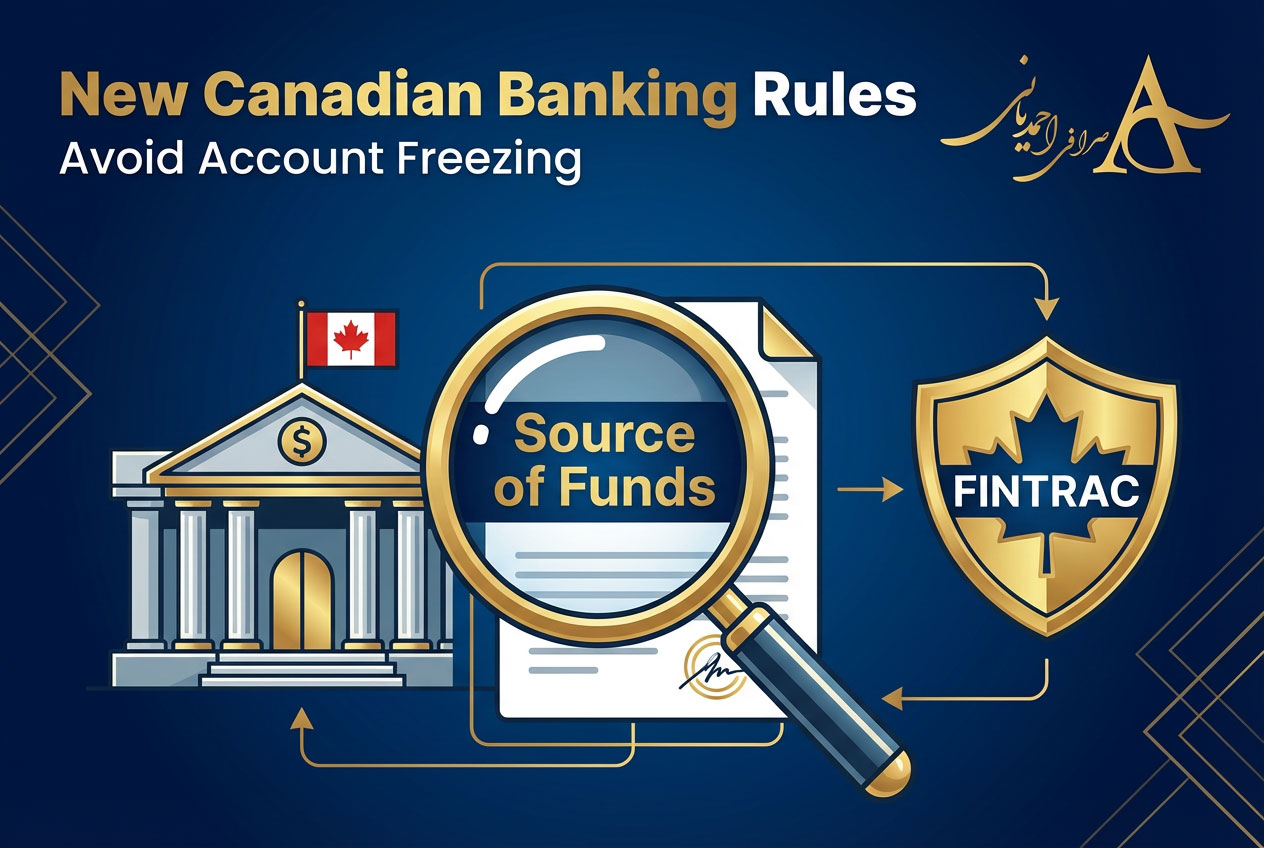
In 2025, the Financial Transactions and Reports Analysis Centre of Canada (FINTRAC) has tightened its grip on international flows. If you are learning how to send money from Iran to Canada, you cannot ignore these rules. Canadian banks are now operating under “Zero-Threshold” reporting pressure for transactions linked to high-risk jurisdictions. This doesn’t mean you can’t receive money, but it means the bank is watching closely.
The most critical concept to understand is “Source of Funds.” Canadian banks must report any transaction that looks like money laundering. This is where many Iranians make a mistake. They use “Hawala” dealers who are not professional. These dealers might ask five different strangers to go to a bank branch and deposit $3,000 cash into your account to make up a $15,000 transfer. This is a disaster for your financial reputation.
When a bank sees multiple cash deposits from unknown people, their security algorithm flags your account for “Structuring” or money laundering. This often leads to an immediate account closure. To avoid this, you must use a legitimate exchange like Sarafi Havale. They ensure the transfer comes as a single, clear transaction or a wire transfer from a company. This transparency tells the bank that the money is legitimate family savings or student support, not illicit funds. You should never be afraid of reporting legitimate money, but you should be terrified of undefined cash deposits.
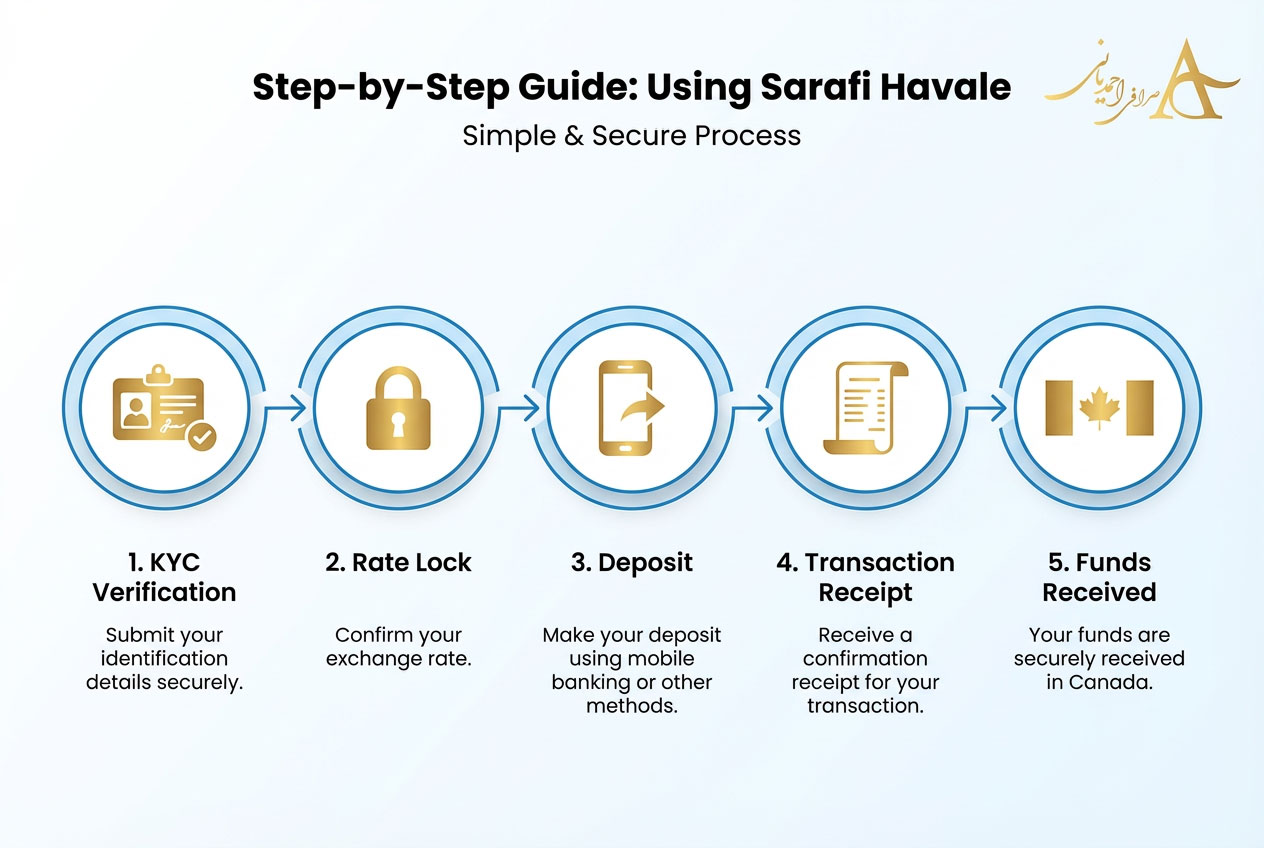
Step-by-Step Guide: Using Sarafi Havale for Transfer
Using a professional service simplifies the complexity. If you want to know how to send money from Iran to Canada without getting a headache, follow this standard workflow used by Sarafi Havale.
Step 1: KYC (Authentication)
Trust works both ways. Before money moves, the exchange needs to know who you are. This is a legal requirement.
- You will need to send a picture of your National ID card or Passport.
- Often, you will be asked to record a short video or take a selfie holding your ID and a bank card. This prevents identity theft and ensures no one is using your name to move money.
Step 2: Locking the Rate
Currency markets are volatile. The price of the Rial against the Dollar changes every hour.
- Contact the Sarafi (usually via WhatsApp or phone) to ask for the current “Remittance Rate.”
- Once you agree on the price, the rate is “locked.” This protects you. Even if the price jumps ten minutes later, you still pay the agreed amount.
Step 3: Rial Deposit
You need to pay the equivalent amount in Iran. The exchange will provide their official bank account number.
- Transfer the funds using mobile banking, internet banking, or by visiting a branch.
- For amounts higher than the daily mobile limit, you will use the Satna or Paya interbank systems.
Step 4: Receipt & Transfer
Once the Rial settles in the exchange’s account, the process on the Canadian side begins.
- You send the payment proof to the Sarafi.
- They issue a receipt (Havale receipt) to you.
- They instruct their financial partners in the UAE, Turkey, or Europe to wire or deposit the CAD into your Canadian account.
Step 5: Confirmation
The money lands in your account.
- This usually happens within 1 to 3 business days.
- Once you see the funds in your balance, the deal is complete. Always keep your chat history and receipts until the money is visible.
Documents You Need to Prevent Bank Freezing in Canada
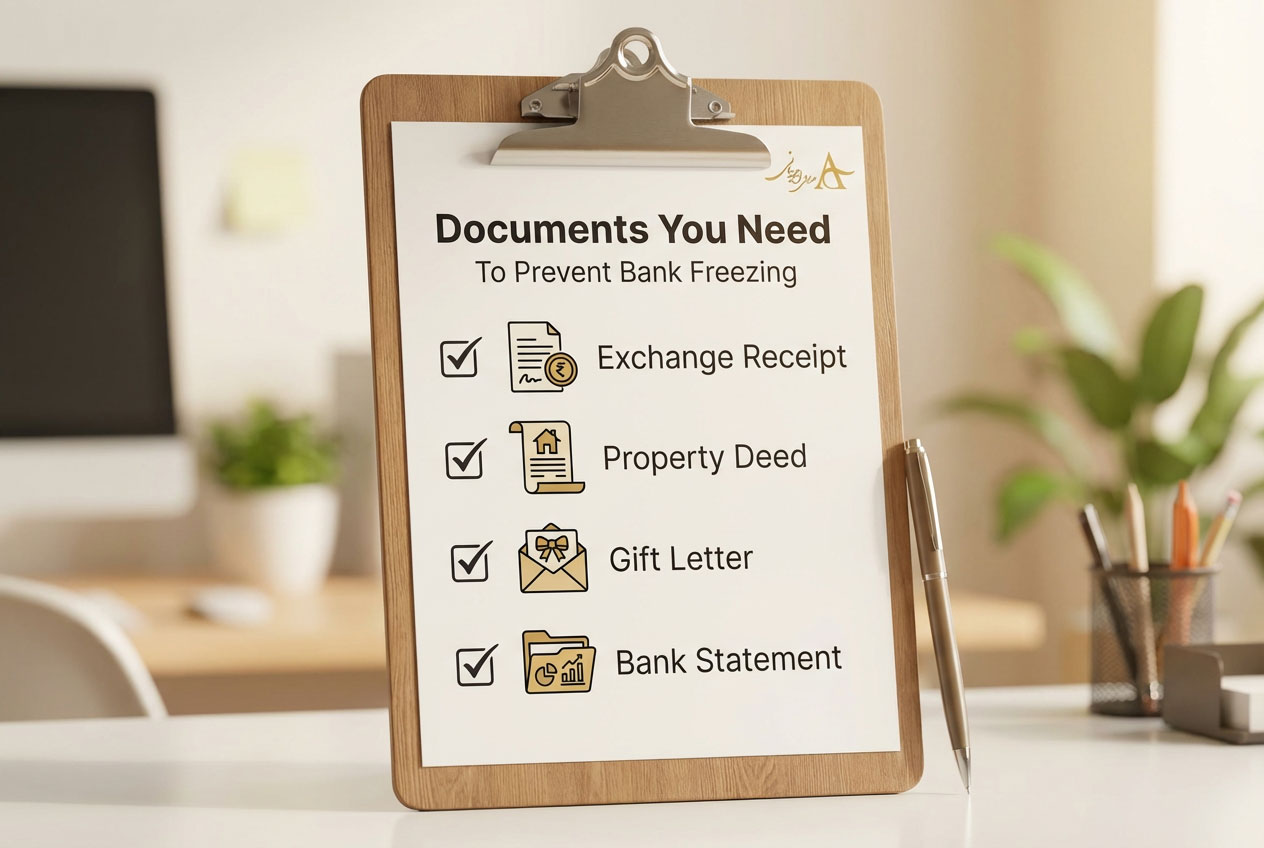
Documentation is your shield. When you are figuring out how to send money from Iran to Canada, you must prepare for the bank to ask questions. It does not happen every time, but being ready prevents panic. The goal is to prove the money is yours and it was obtained legally.
Here is a checklist of documents you should have scanned on your computer:
- The Exchange Receipt: This is the most vital piece of paper. It proves you used a registered company (Sarafi Havale) to move the funds. It shows the date, the amount in Rial, and the amount in CAD. It links the two sides of the transaction.
- Translated Property Sale Deed: If you sold a house or land in Iran to generate the money, you need the sale deed. Have it translated into English by an official translator. The figures on the deed should match the volume of money you are moving.
- Gift Deed: If your parents are sending you money, write a simple letter. It should state: “I, [Parent’s Name], give this money to my child as a gift for living expenses. This is not a loan.” Both parties should sign it. This simple paper satisfies many bank compliance queries.
- Bank Statements: A translated bank statement from Iran showing the money sitting in your account before the transfer proves the funds were not generated overnight from illegal activity.
| Document | Why It Matters for Canada | Who Provides It | When You Need It |
|---|---|---|---|
| Exchange Receipt (Sarafi) | Shows a clean, traceable route and supports “source of funds” | Sarafi Havale | Always (especially over $10,000 CAD) |
| Gift Letter (signed) | Explains family support clearly (reduces bank questions) | Parent/Sender + You | Family transfers / living expenses |
| Proof of Savings / Bank Statement | Shows funds existed before transfer (reduces AML flags) | Iranian bank | Medium–large amounts |
| Property Sale Deed (translated) | Strongest proof for large transfers (e.g., condo purchase) | Official translator | Large transfers / major purchases |
| Tuition/GIC proof (invoice/portal) | Justifies student-related transfers | University/Bank | Tuition or GIC payments |
Comparing Fees: Exchange vs. Crypto vs. Street Market
Cost is a major factor when deciding how to send money from Iran to Canada. Many people look only at the exchange rate, but they forget the hidden fees. A method that looks cheap might end up being the most expensive once all costs are added.
| Feature | Licensed Exchange (Sarafi) | Cryptocurrency (USDT) | Street Market / Hawala |
| Speed | 1 – 3 Days | Instant (Network time) | Unpredictable |
| Safety | High (Regulated) | Medium (Exchange Bans) | Low (Theft/Fraud) |
| Traceability | Excellent (Receipts) | Poor (Blockchain only) | None |
| Hidden Fees | Low (Rate is inclusive) | High (Gas + Trading fees) | High (Risk premium) |
The Reality of Crypto Costs: While buying USDT seems easy, you lose money at every step. You pay a fee to buy Rial-to-USDT. You pay a network fee to move it. You pay a trading fee to sell USDT-to-CAD. You pay a withdrawal fee to get it into your bank. Plus, the spread (difference between buy and sell price) on Canadian platforms is often high. On the other hand, a reputable service like Sarafi Havale usually gives you a single “all-in” rate. You know exactly how much Rial you pay and how much CAD you get.
What is the “Cap” (Limit) for Sending Money?
People often ask if there is a legal ceiling on the amount. When learning how to send money from Iran to Canada, you need to look at the limits on both sides of the ocean.
Limits in Iran
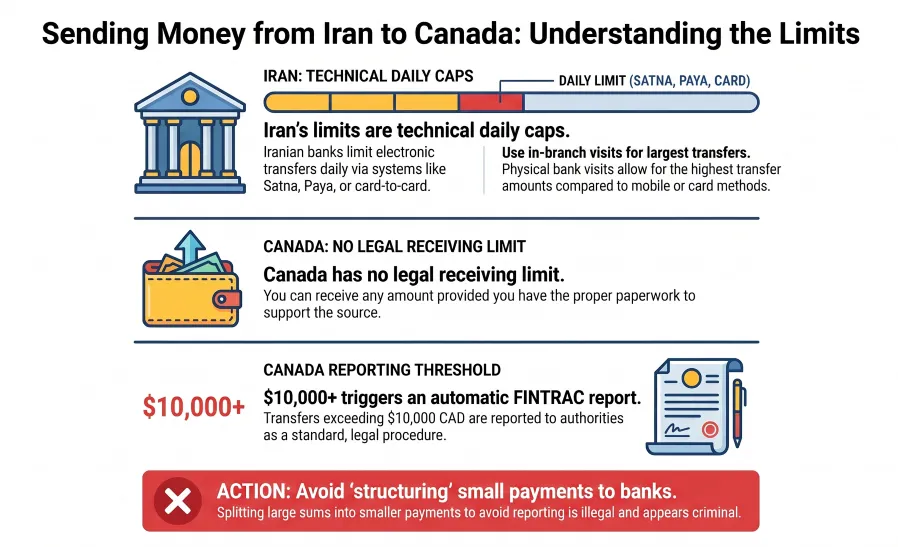
The limitation in Iran is technical, not usually legal for personal savings. The banking system has daily caps on electronic transfers:
- Card-to-Card: Limited to small amounts daily.
- Satna and Paya: These systems allow for much larger transfers (hundreds of millions of Tomans).
- In-Branch: Visiting the bank allows for the largest transfers.
If you need to send a very large amount (like for buying a condo in Toronto), Sarafi Havale can advise you on how to break the Rial payments into manageable chunks over a few days.
Limits in Canada
Canada does not have a limit on how much money you can receive. You can receive a million dollars if you have the paperwork for it. However, there is a reporting threshold.
- The $10,000 Rule: Any transfer over $10,000 CAD triggers an automatic report to FINTRAC. This is normal. Do not fear it.
- Do Not “Structure”: Some people try to send $9,500 multiple times to avoid the report. If you are comparing different regions, you may also want to see how to send money to iran from usa and how reporting rules differ for outbound transfers. This is illegal. It is called “structuring” and it makes you look like a criminal. It is much better to send $50,000 in one go and have a clean receipt than to play games with the bank limits.
Student Transfers to Canada (Tuition & GIC)
Students face specific deadlines and strict requirements. Knowing how to send money from Iran to Canada efficiently is vital for keeping your enrollment active.
Paying Tuition Directly: Most Canadian universities (like UBC, UofT, McGill) use payment portals such as Flywire or PayMyTuition. A good Sarafi can often make payments directly to these portals. You provide the student ID and payment instructions, and the exchange handles the rest. This is excellent because the money goes straight to the institution, reducing the risk of questions regarding your personal bank account.
GIC (Guaranteed Investment Certificate): For the SDS visa stream, you must deposit around $20,000 CAD into a special investment account. Canadian banks are very strict about incoming wires for GIC. The sender’s name usually needs to match the student’s name or a close relative. Sarafi Havale has specific experience with GIC transfers and uses routes that ensure the Canadian bank accepts the fund without rejection.

Conclusion
Sending assets internationally in 2026 requires caution, but it is not impossible. The days of direct banking are gone, but professional alternatives have matured. If you are still asking how to send money from Iran to Canada, the summary is this: avoid cash deals on the street and avoid complex crypto schemes if you want to keep your bank account safe. Using a licensed provider like Sarafi Havale gives you the security of a legitimate transaction, proper receipts, and peace of mind. By preparing your documents and understanding the banking rules, you can move your capital safely to your new home.
FAQ
Is it legal to send money from Iran to Canada?
Yes. Canada allows personal transfers such as family support, gifts, tuition, and savings. The key requirement is a transparent source of funds and using compliant transfer channels.
What is the safest way to send money from Iran to Canada?
The safest method is using a licensed Sarafi like Sarafi Havale, which sends funds from a third country via clean banking routes accepted by Canadian banks.
Can Canadian banks freeze my account?
Yes, if the transfer looks suspicious—such as multiple cash deposits or unclear sources. Proper wire transfers with receipts significantly reduce this risk.
Is cryptocurrency a good alternative?
Crypto can work for small amounts, but large transfers often trigger compliance checks on Canadian exchanges. Improper use may lead to frozen assets.
How long does a Sarafi transfer take?
Most transfers arrive in Canada within 1 to 3 business days, depending on the intermediary country and bank processing times.