
 فارسی
فارسی
 english

You cannot use standard international bank transfers to send funds to Iran due to heavy financial sanctions. If you need to move money, you must rely on specialized exchange offices or cryptocurrency. This guide provides a detailed, step-by-step explanation of the only working methods in 2025. You will learn exactly how to send money from India to Iran without your funds getting frozen or lost.
How to Send Money from India to Iran?
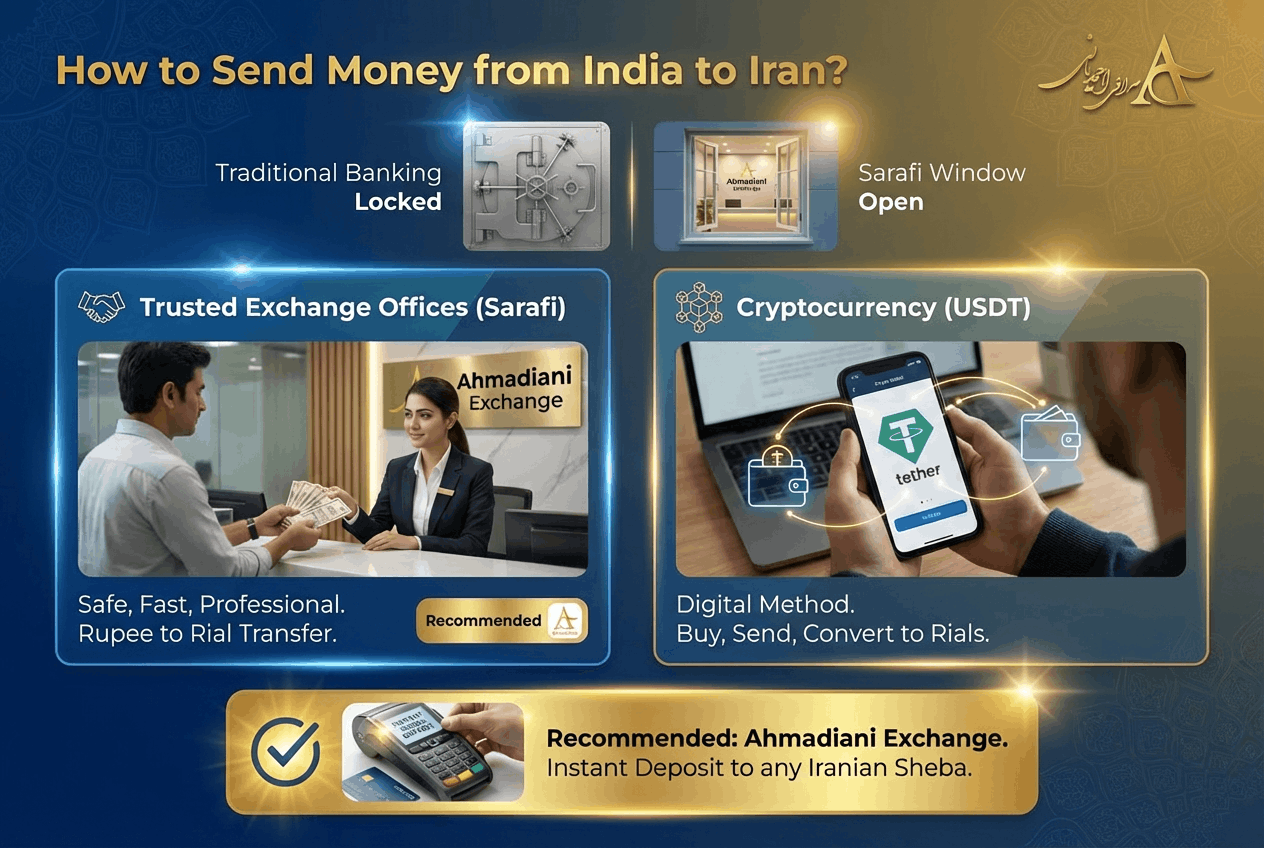
The direct answer to your problem is that the traditional banking door is locked, but the “Sarafi” (Exchange Office) window is wide open. To transfer funds successfully, you have two primary options:
- Trusted Exchange Offices (Sarafi): This is the most popular method for families and traders. A professional service like Ahmadiani Exchange accepts Rupees in India and pays Rials in Iran. It is safe, fast, and does not require technical knowledge.
- Cryptocurrency (USDT): This is a digital method where you buy crypto in India and send it to a wallet to be converted into Rials.
We strongly recommend using a reputable Sarafi like Ahmadiani Exchange. They have specific infrastructure in place for the India-Iran corridor. If you’re wondering how to send money from Iran to India, they allow you to transfer Rupees locally, and they deposit Rials instantly to any Iranian Sheba number. This avoids the volatility of the black market and ensures your money is handled by professionals, not street dealers.
Learn More About Sending Money from India to Iran
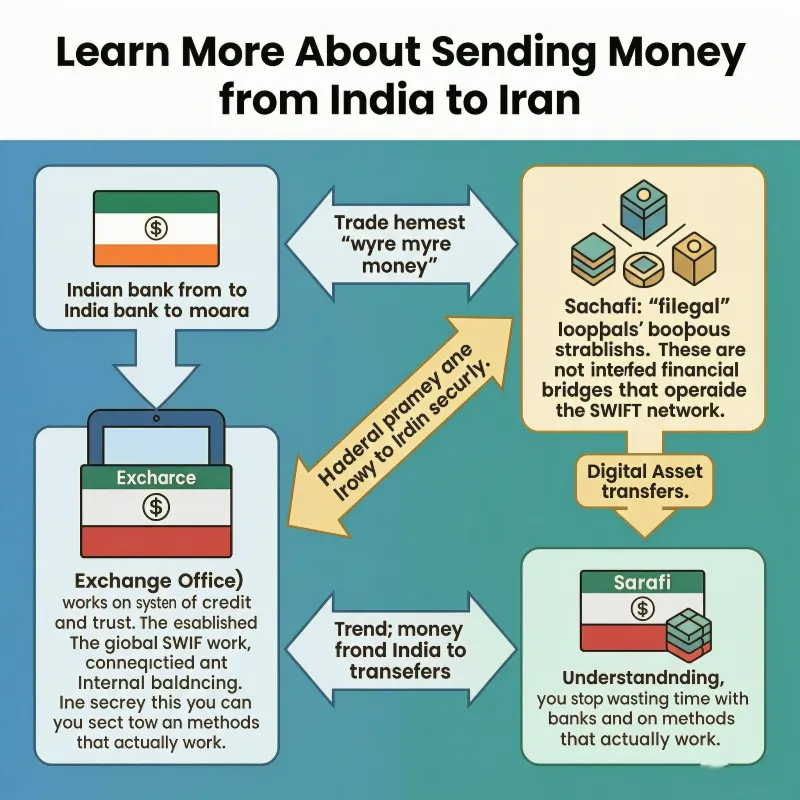
To navigate this financial landscape, you must understand the current restrictions. Since the beginning of 2025, financial regulations have tightened significantly. The sanctions imposed on Iran’s banking sector mean that the global SWIFT network, which connects almost all banks worldwide, does not function for Iran. Consequently, a simple request to “wire money” from an Indian bank to an Iranian one is technically and legally impossible for individuals.
However, trade and life must go on. This has led to the strengthening of the “Hawala” system and digital asset transfers. These are not “illegal” loopholes but established financial bridges that operate outside the SWIFT network. A Sarafi (Exchange Office) works on a system of credit and trust. When you pay them in India, they do not physically move cash across the border; they use their reserves in Iran to pay the recipient. This internal balancing act is the secret to how to send money from India to Iran securely. By understanding this, you can stop wasting time with banks and focus on methods that actually work.
Why You Cannot Use Western Union or Indian Banks
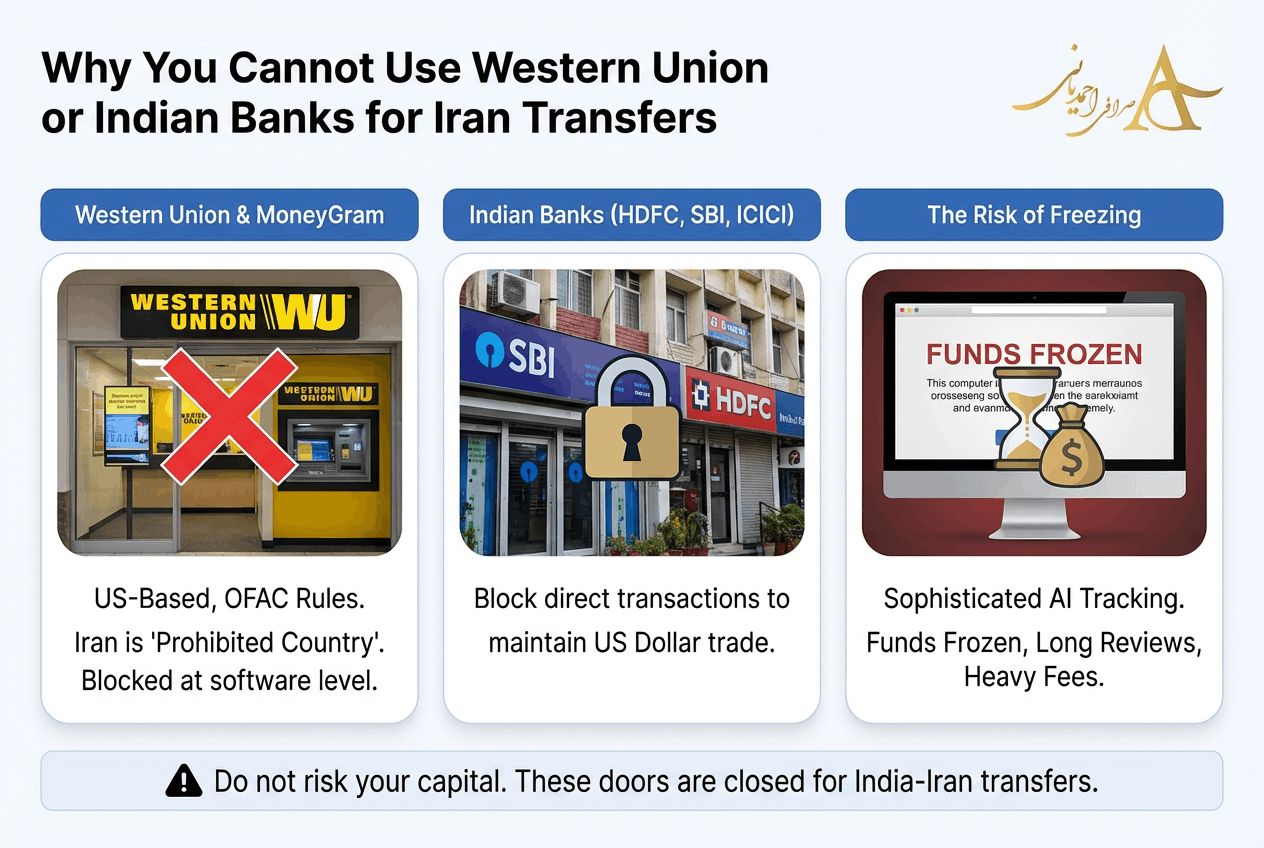
The first option most people think of is Western Union or a commercial bank, but these are dead ends. You must avoid them completely to prevent legal issues.
Here is why these standard channels fail:
- Western Union & MoneyGram: These services are US-based and strictly adhere to OFAC (Office of Foreign Assets Control) rules. Iran is listed as a “Prohibited Country.” If you walk into a branch in Delhi or Mumbai, the agent cannot even select Iran on their computer screen. It is blocked at the software level.
- Indian Banks (HDFC, SBI, ICICI, etc.): Indian banks value their relationship with the US financial system above all else. To maintain their ability to trade in US Dollars, they block all direct transactions to Iran.
- The Risk of Freezing: Some users try to be clever by routing money through a third country, like the UAE. This is dangerous. Banks use sophisticated AI to track payment patterns. If they suspect your money is ultimately going to Iran, they will freeze the funds for “compliance review.” This review can take 6 months, and often, the money is returned minus heavy fees.
If you ask a bank manager how to send money from India to Iran, they are legally required to decline your request. Do not risk your capital by trying to force a transaction through these closed doors.
Method 1: Transfer via Trusted Exchange Offices (Best for Cash/Rupees)
This is the most practical and secure solution for 95% of users, including students, tourists, and business owners. It replicates the convenience of a bank transfer but uses a private network.
How the Process Works:
The system is simple and efficient. It involves a domestic transfer in India and a domestic transfer in Iran, bridged by the Exchange Office.
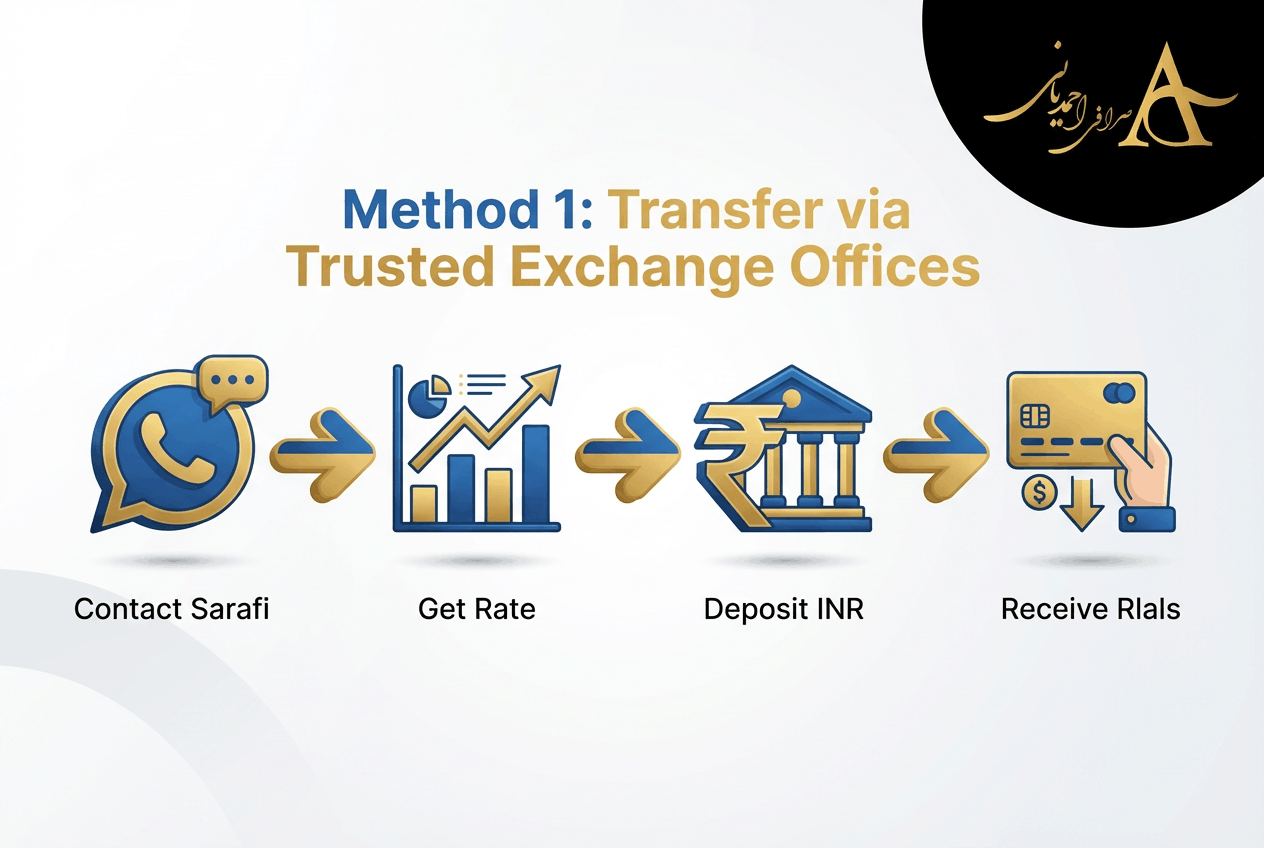
- Contact the Sarafi:Reach out to a trusted provider like Ahmadiani Exchange via WhatsApp or their website.
- Get the Rate:Ask for the current “Rupee to Rial” exchange rate. This rate changes daily based on the market.
- Deposit in India:You transfer Indian Rupees (INR) to the Exchange’s local bank account in India. If you are in a city where they have a physical presence, you can also hand over cash.
- Receive in Iran:Once the Sarafi confirms the Rupee receipt (usually within an hour), their Tehran office transfers the equivalent Rials to your provided Iranian bank card or Sheba number.
Why Choose Ahmadiani Exchange?
Trust is the most critical factor when learning how to send money from India to Iran. Ahmadiani Exchange offers distinct advantages:
- Reliability: Unlike anonymous traders on Telegram, a professional exchange has a reputation to protect. Your money is guaranteed.
- Speed: They specialize in this route, meaning transfers are often instant or completed within the same business day.
- Competitive Rates: Street dealers often take a huge margin. A professional exchange offers rates closer to the real market value.
Method 2: Sending Money via Cryptocurrency (USDT) – The Modern Way
For those who are tech-savvy, cryptocurrency offers a high-speed digital alternative. It gives you full control over your funds without relying on banking hours. Also, pay attention to the following article from the kene site:
Digital currencies can offer access to financial services for individuals who do not have traditional bank accounts, particularly in developing economies where mobile-first solutions are commonplace.
Step-by-Step Guide:
- Step 1: Buy USDT. Register on a recognized Indian crypto exchange (such as CoinDCX or other compliant platforms). Complete your identity verification (KYC). Deposit Rupees from your bank and purchase “USDT” (Tether). USDT is a digital dollar that holds a stable value.
- Step 2: Get the Address. Contact your Sarafi (e.g., Ahmadiani) and ask for their “TRC20 Wallet Address.”
- Step 3: Transfer. Send the USDT from your Indian app to the Sarafi’s wallet address. This transfer happens on the blockchain and typically takes 2 to 5 minutes.
- Step 4: Conversion. The Sarafi receives the USDT instantly. They calculate the Rial equivalent and deposit it into the Iranian bank account immediately.
Why is this popular?
This method is increasingly popular for those searching how to send money from India to Iran because it bypasses banks entirely. It is open 24/7, works on holidays, and has very low transaction fees (often around $1 per transfer on the Tron network). It is efficient for both small and large amounts.

The “UCO Bank” Mechanism: Truth vs. Myth
There is a lot of misinformation online about UCO Bank. It is crucial to clarify this so you do not waste time attempting a method that will not work for you.
The Truth:
UCO Bank acts as the primary agency for the Indian government to settle trade payments with Iran. However, this channel is strictly reserved for commercial exporters and importers of essential commodities like oil, rice, and pharmaceuticals. It operates under specific government guidelines.
The Myth:
You cannot open a personal savings account at UCO Bank to transfer money to your family. The bank will reject any application for personal remittance to Iran. If you are an individual asking how to send money from India to Iran, UCO Bank is not the solution. It is a B2B (Business to Business) channel, not a P2P (Person to Person) one.

Challenges of Money Transfer: Sanctions & The 2025 Landscape
The environment for money transfers has become more hostile in 2025 due to geopolitical shifts. You need to be aware of the “invisible” risks.
Secondary Sanctions and Bank Fears:
Indian banks operate under the fear of “Secondary Sanctions.” This means if the US government catches an Indian bank facilitating an Iran-related transaction, that bank could be cut off from the US Dollar system. This is a death sentence for a bank, so they take zero risks.
Critical Advice on Bank Remarks:
When you transfer Rupees to a Sarafi’s agent in India, you must be extremely careful with the transaction description/remarks field in your banking app.
- NEVER Write: “Iran,” “Persian,” “Tehran,” “Sanctions,” or “Sarafi.”
- ALWAYS Write: Generic terms like “Gift,” “Personal loan return,” or “Travel expense.”
Banking software scans for specific keywords. Using the wrong word is the fastest way to get your account frozen. Mastering this small detail is a key part of knowing how to send money from India to Iran safely.
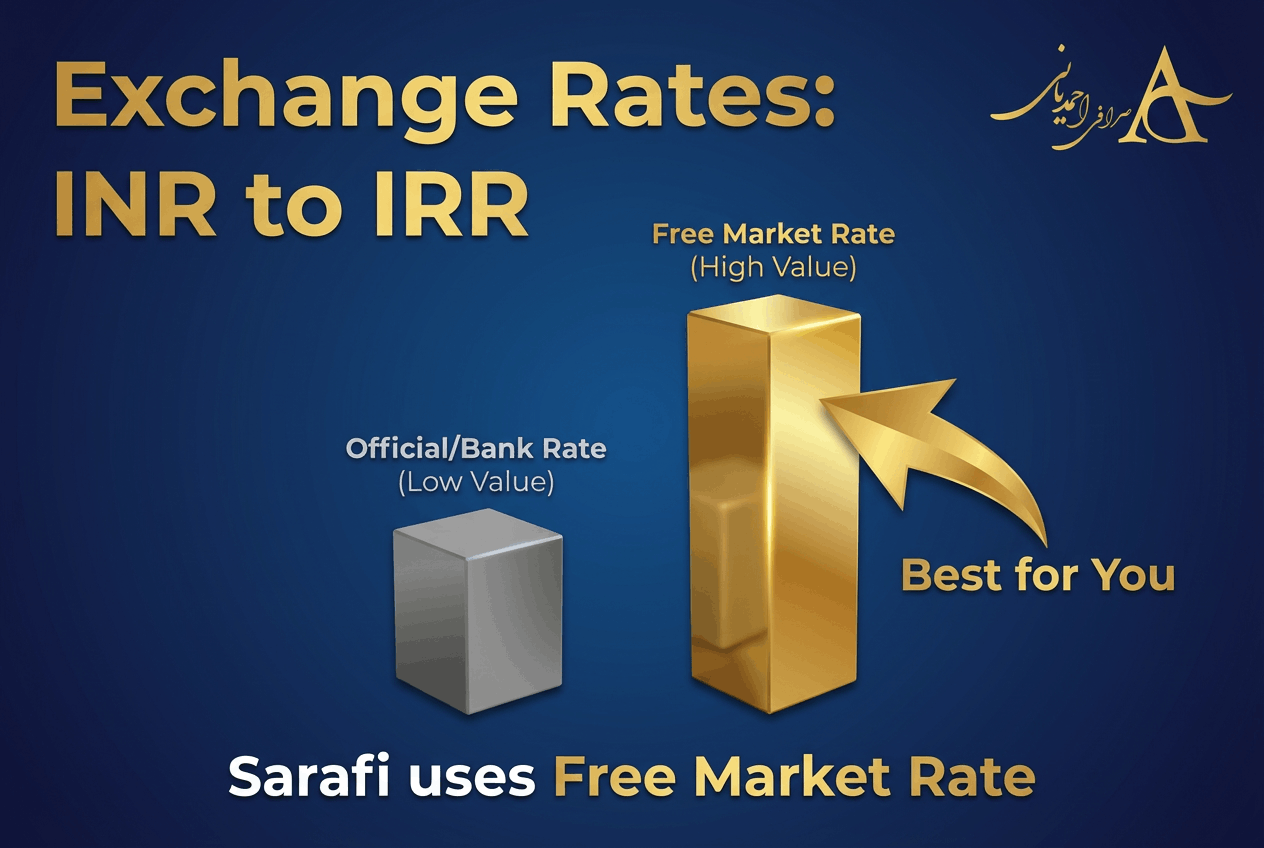
Exchange Rates: INR to IRR (NIMA vs. Free Market)
The value of your money depends entirely on which exchange rate applies to your transaction. Iran has a multi-tiered currency system.
| Rate Type | Used By | Value Description |
| Official Rate | Government only (Medicine/Wheat) | Very Low (subsidized) |
| NIMA Rate | Large Exporters & Industrial Importers | Medium Value |
| Free Market Rate | You (Tourists, Families, Students) | Highest Value (Real Street Price) |
What this means for you:
When you send money via a service like Ahmadiani Exchange, your transaction is calculated using the Free Market Rate. This is highly beneficial for the sender. Since the Rial is weaker than the Rupee in the free market, your Indian currency buys a significant amount of Rials. If you’re looking for how to send money from Iran to Philippines, the same careful approach applies. Always check the daily free market rate with your Sarafi before transferring. Do not use the rates you see on Google or official news sites, as they often display the lower government rate.
Tips for Iranian Students in India
Thousands of Iranian students study in India. They face unique financial challenges, particularly regarding paying tuition and receiving support from home.
Receiving Money (Reverse Remittance):
If you are a student, your parents in Iran can use a Sarafi to send money to you. They pay Rials in Tehran, and the Sarafi deposits Rupees into your Indian bank account (via IMPS/NEFT). This is safe as long as the Sarafi uses a clean Indian account for the transfer.
Paying University Fees:
Do not withdraw huge amounts of cash to pay your fees. It is better to have the Sarafi transfer the funds directly to your bank account, and then you pay the university via cheque or bank transfer. This creates a legitimate paper trail for your visa extension and police registration (FRRO).
Ahmadiani Exchange for Students:
Since Ahmadiani Exchange understands the student ecosystem, they ensure that the Rupees sent to your account come from legitimate sources, protecting you from scrutiny by Indian tax authorities. This professional handling is vital when you are figuring out how to send money from India to Iran or vice versa.
Carrying Cash: Customs Limits & Rules
Moving money physically is the oldest method, but it is fraught with risks and legal limitations.
Customs Limits:
Passengers traveling from India are generally allowed to carry up to $5,000 USD in cash (or equivalent) without declaration. If you carry between $5,000 and $10,000 USD, you must declare it on a customs form. Anything above this can be seized.
The Rupee Trap:
A common mistake is carrying Indian Rupees (INR) to Iran. Do not do this. The Rupee is not a freely convertible currency in Iranian street markets. You will either find no one to exchange it, or you will lose 20-30% on the exchange rate. The correct strategy is to convert your INR to USD or EUR in India before you fly, and then exchange those hard currencies in Tehran. However, digital transfer via Sarafi is always safer than carrying cash.
Fees and Transaction Costs Comparison
Understanding the costs helps you choose the most economical method.
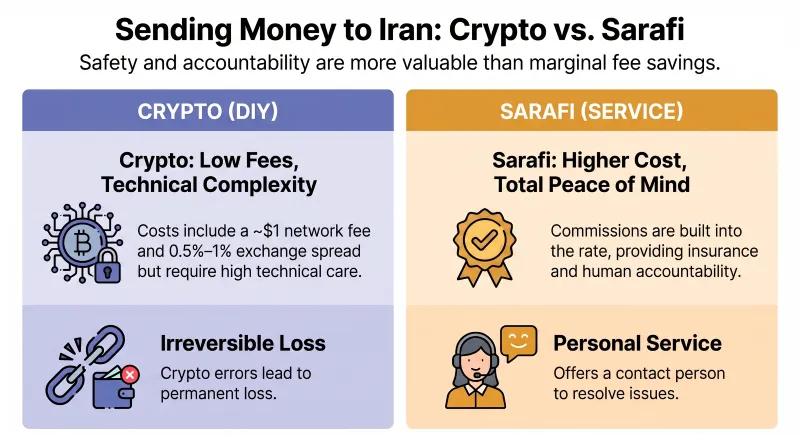
- Crypto Costs:
- Network Fee: ~$1 (TRC20 network).
- Exchange Spread: 0.5% – 1% (Cost of buying USDT in India).
- Total: Very low for large amounts, but requires technical care.
- Sarafi (Hawala) Costs:
- Commission: Included in the exchange rate.
- Total: Slightly higher than raw crypto costs, but includes service and insurance.
While crypto might save you a small percentage, a Sarafi offers peace of mind. If you make a mistake with a crypto address, the money is lost forever. If you use a Sarafi like Ahmadiani, you have a phone number to call and a person to hold accountable. For most people asking how to send money from India to Iran, paying a small premium for safety is the smart choice.
Conclusion
While the doors of conventional banking are shut, the windows of opportunity remain open through professional financial services. You do not need to feel helpless against sanctions. Discover the best ways to send money from Iran to UK using trusted services for safe and efficient transfers.
To summarize, stop looking for banking solutions that do not exist. Instead, utilize the two proven methods: Trusted Exchange Offices and Cryptocurrency. By using a specialized service like Ahmadiani Exchange, you gain access to a secure, fast, and transparent system that bridges the gap between the Rupee and the Rial. They handle the complexity so you don’t have to. Whether you are a student, a trader, or a tourist, these methods solve the problem of how to send money from India to Iran effectively in 2025.
Frequently Asked Questions
- Is it legal to use a Sarafi to send money to Iran?
In the context of sanctions, using a Sarafi (Hawala) is the standard method for personal remittances. Since the transaction in India is a domestic transfer (Rupees to Rupees) and the transaction in Iran is domestic (Rials to Rials), no international wire laws are technically broken by the user. It is a private settlement. - Can I trust Ahmadiani Exchange with large amounts?
Yes. Ahmadiani Exchange is an established name in this specific market corridor. For large amounts, they often provide additional verification and can handle the liquidity required, unlike small-time street dealers. - How long does a crypto transfer take?
The crypto transfer from your wallet to the Sarafi’s wallet usually takes less than 5 minutes. The Sarafi then typically deposits the Rials into the Iranian account within 1 to 3 hours during business days. - What is the maximum amount I can send from India?
This depends on your method. If using Indian banking to pay the agent, you are limited by your bank’s daily transfer limits (e.g., IMPS limit is often 5 Lakhs INR). Crypto exchanges also have daily withdrawal limits based on your KYC level. - Will the recipient in Iran get into trouble?
Generally, no. Receiving Rials into an Iranian bank account is a normal domestic transaction. As long as the source of Rials (the Sarafi’s account) is clean, the recipient faces no issues.