
 فارسی
فارسی
 english

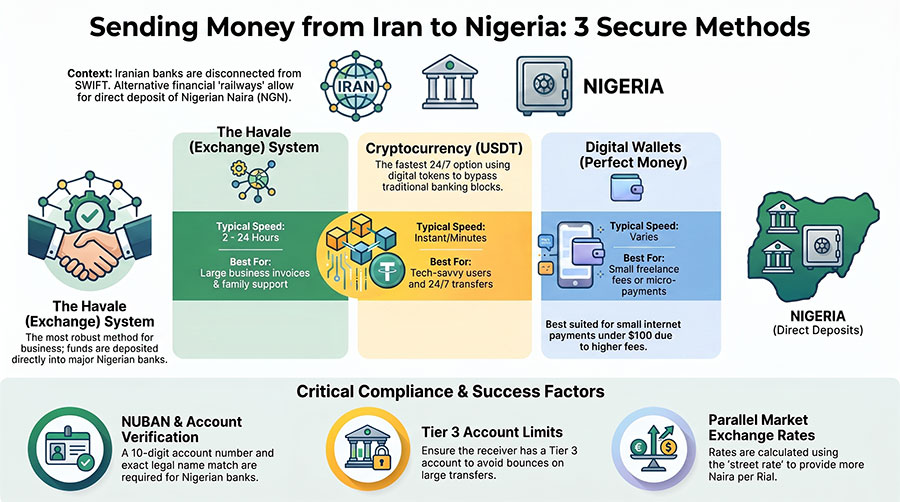
Sending funds from Tehran to Lagos presents a unique challenge due to the disconnection between the Iranian banking sector and the global financial system. Standard options like wire transfers or Western Union do not work for Iranian residents, and finding a direct path often feels impossible. However, commerce and family support between these two nations continue to thrive through alternative financial channels. This article provides a clear, technical roadmap on exactly how to send money from Iran to Nigeria using secure, modern, and tested methods.
Instant Transfer to Nigeria via Ahmadiani Exchange
The most direct and effective method to move funds across this corridor is through Ahmadiani Exchange. We provide an instant transfer service that completely bypasses the blocked international banking network.
When you use our service, you do not need to worry about SWIFT codes or sanctions. The process is internal and secure. If you’re wondering how to send money from Iran to India, the process is similar: you transfer Iranian Rials (IRR) to our local account in Iran. Once confirmed, we release the equivalent amount in Nigerian Naira (NGN) directly to the receiver’s bank account in Nigeria. We utilize a network of liquidity providers in Lagos and Abuja to ensure the settlement happens locally. This means the Nigerian receiver sees a domestic transfer in their bank app, which does not trigger international flags or blocks.
Key Capabilities of this Service:
- Direct Bank Settlement: We deposit funds directly into all major Nigerian commercial banks, including Access Bank, Zenith Bank, GTBank (Guaranty Trust Bank), United Bank for Africa (UBA), and First Bank of Nigeria.
- Currency Flexibility: While the primary demand is for Naira, we can also arrange for US Dollar cash payouts in Nigeria for specific commercial needs.
- Settlement in Rials: You pay in your local currency. You do not need to source Dollars or Euros yourself. We handle the conversion math for you.
Key Benefits:
- Speed: For most major banks, the transfer is completed within the same business day. Often, it takes less than a few hours.
- Security: We offer a full guarantee. If the funds do not reach the destination due to a technical error on our side, your Rials are returned to you immediately.
- Competitive Rates: We track the parallel market rate (the real street rate) to ensure you get the maximum amount of Naira for your Rials.
If you are looking for the simplest answer to how to send money from Iran to Nigeria, contacting our support team for a quote is the first step.
Know More About Sending Money to Nigeria
To successfully navigate financial transfers between Iran and West Africa, you must understand the underlying friction in the system. The difficulty stems from two distinct regulatory environments. First, Iran is under heavy international financial sanctions, which means Iranian banks are cut off from the SWIFT messaging system. You cannot walk into Bank Melli or Bank Pasargad and ask to send money to Africa. Second, Nigeria has its own complex financial rules managed by the Central Bank of Nigeria (CBN). The CBN frequently updates policies on foreign exchange to stabilize the Naira, often restricting how foreign currency enters the country and how it is converted.
Despite these high barriers, the flow of capital does not stop. Traders import charcoal, wood, and agricultural products from Nigeria to Iran, and students or families transfer living expenses. The solution lies in Havale (Remittance) systems, Cryptocurrency, and specialized exchanges like Ahmadiani. These methods operate on a peer-to-peer or agent-based model. They balance ledgers in two different countries without physically moving cash across borders. This method is legal, efficient, and ensures that trade continues regardless of political tensions. Learning how to send money from Iran to Nigeria or how to send money from Iran to Philippines is essentially learning how to utilize these independent financial railways.
Best Methods for Money Transfer from Iran to Nigeria
There are several reliable methods to execute these transfers, but they differ significantly in terms of speed, cost, and technical difficulty. Here are the most reliable methods currently available:
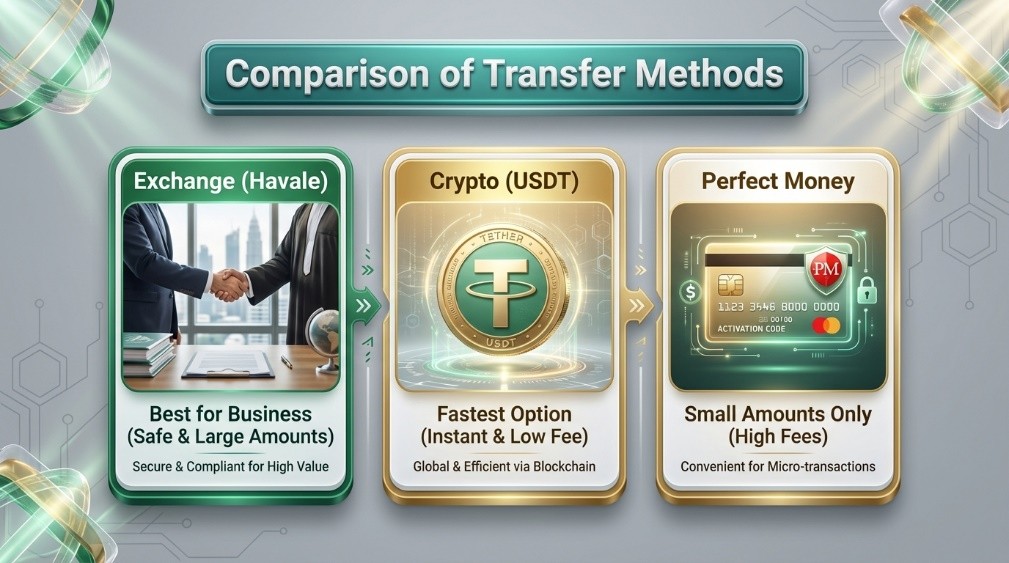
- Specialized Exchange Offices (Sarafi): The safest option for large amounts and business invoices.
- Cryptocurrency (USDT/Bitcoin): The fastest digital option for tech-savvy users.
- Perfect Money / WebMoney: Good for small internet payments.
We will detail each method below to help you decide which fits your specific needs.
Sending Money via Crypto (USDT & Bitcoin)
Cryptocurrency has revolutionized payment corridors in Africa, and Nigeria has one of the highest crypto adoption rates globally. This makes it a very practical option for Iranians. The specific token used is almost always Tether (USDT), a stablecoin pegged to the US Dollar.
How it works:
The process begins with you purchasing USDT from an Iranian exchange or directly from Ahmadiani Exchange using your Rials. You then send these digital tokens to the receiver’s digital wallet. The receiver in Nigeria receives the USDT instantly. They must then convert this USDT into Naira. They typically do this using a P2P (Peer-to-Peer) platform like Binance Nigeria, Bybit, or KuCoin, where they sell the crypto to a local trader who transfers Naira to their bank account.
Pros and Cons:
The main advantage is speed; the blockchain operates 24/7, and transactions take minutes. The fee is also very low if you use the TRON network (TRC20), usually costing only 1 USDT per transaction regardless of the amount. However, there is a significant risk. If you make a mistake in the wallet address, the funds are lost forever. Additionally, the receiver must be comfortable with technology. If you are sending money to an elderly parent or a non-technical vendor, they will struggle to convert the crypto into spendable cash. For learning how to send money from Iran to Nigeria via crypto, technical education is required for both sides.
Traditional Havale System (Exchange Transfer)
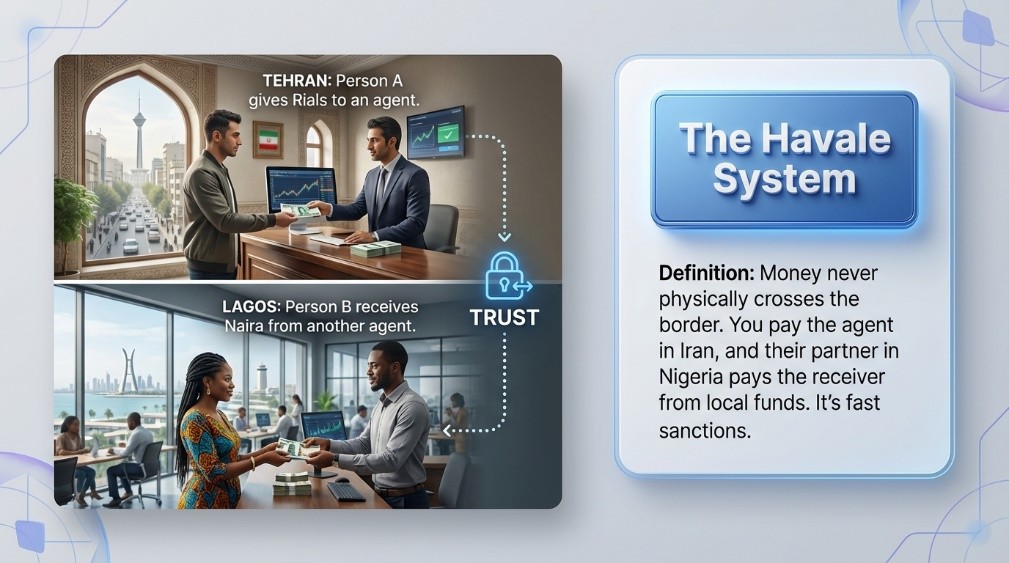
The Havale (or Hawala) system is the most robust method for commercial trade and substantial transfers. It is a trust-based system that relies on a network of brokers. In the context of Iran and Nigeria, it is the primary way importers pay for goods.
Detailed Process:
You visit Ahmadiani Exchange (in person or online) and agree on a Rial-to-Naira exchange rate. You transfer the Rials to our account. We then instruct our trusted partner in Lagos or Abuja to release the equivalent Naira to your beneficiary. The money never physically crosses a border; the debt is settled between the agents later.
Why this is the Best Option for Business:
The Havale system offers features that apps cannot match. First, it allows for high-volume transfers without triggering the algorithmic blocks that common banking apps have. Second, it offers Cash Pick-up services for receivers who do not have a bank account or prefer physical currency. Third, and most importantly, it isolates you from the volatility of the crypto market. You know exactly how much you are paying, and the receiver gets the exact agreed amount. When seasoned traders ask how to send money from Iran to Nigeria, they almost exclusively use the Havale system because it provides a clean paper trail for their inventory without the headache of digital wallets.
Digital Wallets (Perfect Money & WebMoney)
Perfect Money and WebMoney are electronic payment systems that historically allowed users from sanctioned regions to open accounts. They act like a digital bank account but are not connected to the Western central banking system.
Current Status:
While still functional, these methods are becoming legacy options. You can buy a Perfect Money voucher in Iran and send the code to a Nigerian. The Nigerian user then finds a local exchanger to swap that code for Naira. The problem is the cost. The exchange rates for cashing out Perfect Money in Nigeria are often poor, and fees can eat up 5% to 10% of your total capital. It is really only useful for very small, low-priority transfers, such as paying a small fee for a freelance job. For anything above $100, other methods are superior.
Important Documents for Nigeria Money Transfer (KYC)
Compliance is what keeps your money safe. Unlike the anonymity of the black market, a reputable exchange follows Know Your Customer (KYC) protocols. This protects you from fraud and ensures the money goes to the right person.
Simplicity of the Process:
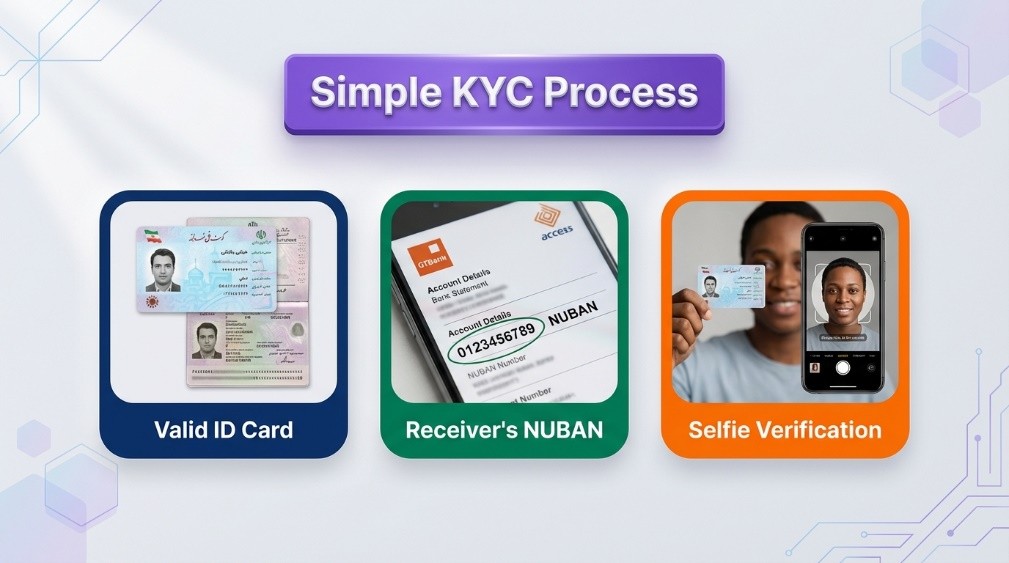
We do not require the complex forms that Western banks demand. For an Iranian sender, the requirement is usually a clear picture of your National ID card (Kart-e-Melli) and a selfie verification to prove you are the person on the ID. This is a one-time process for your first order.
Destination Info (The Receiver):
To ensure the transfer does not bounce, you must provide accurate Nigerian banking details. The most critical piece of information is the NUBAN (Nigeria Uniform Bank Account Number). This is a standard 10-digit number used across all Nigerian banks. You also need the receiver’s full legal name as it appears on their bank verification documents. If the name on the order is Mohammad Ali but the bank account name is Mohammad Ali Reza, the Nigerian bank will reject the transfer. Precision here saves days of delay. Mastering these details is part of knowing how to send money from Iran to Nigeria effectively.
Understanding the Exchange Rates (Rial vs. Naira)
One of the most confusing aspects for new clients is the exchange rate calculation. There is no direct Rial to Naira market on the global stock exchange. The calculation involves a double conversion path.
The Path:
Your Rials (IRR) are first valued against the US Dollar (USD). Then, that Dollar value is converted into Nigerian Naira (NGN). Because of this, the final rate depends on two moving targets: the price of the Dollar in Tehran and the price of the Dollar in Lagos.
The Parallel Market Factor:
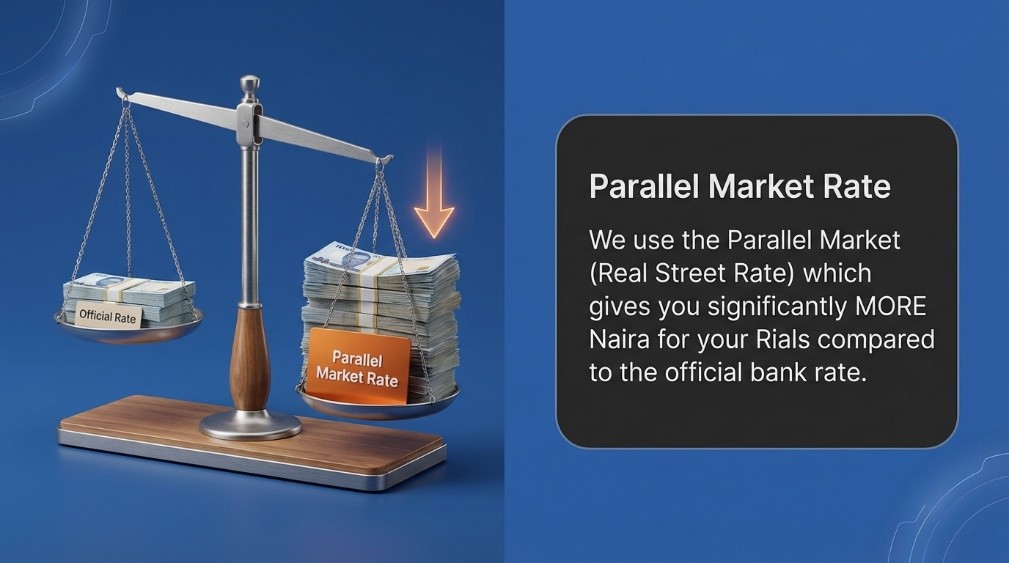
It is crucial to understand that Nigeria operates with multiple exchange rates. There is the Official Central Bank rate, which is often artificially low, and there is the Parallel Market (or Black Market) rate, which reflects the true supply and demand. The Parallel Market rate is significantly higher, meaning you get more Naira for your Dollars. Ahmadiani Exchange always calculates using the competitive Parallel Market rate. This ensures that when you calculate how to send money from Iran to Nigeria, you are getting the best possible value for your Rials. Always check the rate immediately before sending, as volatility can shift prices within hours.
Common Challenges & How to Avoid Scams
The corridor between Iran and Nigeria is generally safe when using professional services, but it attracts scammers who prey on inexperienced users. Awareness is your best defense.
The Nigerian Prince and 419 Scams:
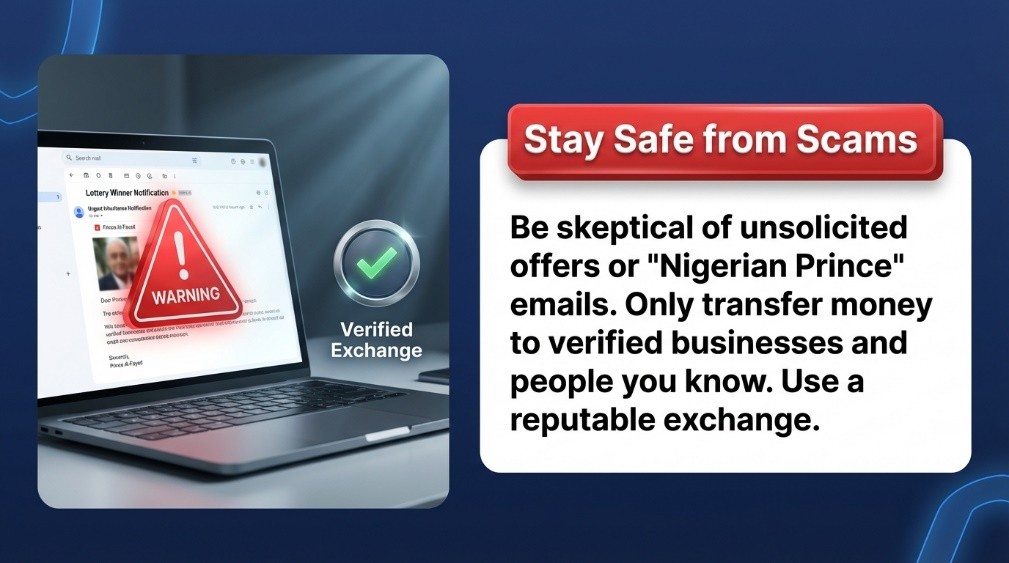
Be extremely skeptical of unsolicited emails or messages from strangers in Nigeria claiming you have inherited money, won a lottery, or need to help move a large fortune. These are classic 419 scams (named after the section of the Nigerian criminal code). Never send money to facilitate a larger release of funds. Legitimate business does not work this way.
Verification is Mandatory:
If you are an importer buying goods like sesame seeds or charcoal, do not trust a WhatsApp profile alone. Demand a video call. Ask to see the product in real-time. Verify the bank account name matches the company name. If a vendor asks you to send money to a personal account name that is different from the company manager’s name, pause and investigate. The onid site also has the following article on this subject:
Clients and customers are becoming increasingly aware of data security issues. When a business takes proactive steps to ensure the security of their personal information through thorough document verification, they are more likely to trust that business. This enhanced level of trust can improve customer loyalty, as clients feel more secure in their interactions with a company that prioritizes their safety.
Exchange Legitimacy:
Avoid unknown individuals on Telegram who offer rates that seem too good to be true. Unlicensed dealers may take your Rials and disappear, or they may send dirty funds to your receiver that get blocked by the Nigerian police. Stick to established offices like Ahmadiani Exchange that have a physical presence and a reputation to protect. This is the golden rule of how to send money from Iran to Nigeria safely.
Fees and Transfer Limits Explained
Cost transparency is essential for planning your finances. The total cost of sending money is usually a combination of the exchange rate spread and a transaction fee.
Fees:
The Spread is the difference between the buy and sell price of the currency. This is standard in all forex transactions. Additionally, there may be a small fixed fee to cover the local banking transfer costs in Nigeria. Compared to the 15-20% fees sometimes seen with indirect Western Union agents, our direct Havale and Crypto methods are significantly cheaper, often costing only a small percentage of the total volume.
Limits and Source of Funds:
For personal transfers via Crypto, there is virtually no limit. However, for bank transfers via Havale, Nigerian banks have Tier levels for accounts. A Tier 1 account (opened with just a phone number) has a very low maximum balance limit (e.g., 50,000 to 300,000 Naira). If you send 1,000,000 Naira to a Tier 1 account, the money will bounce back and get stuck. Always ask your receiver if their account is Tier 3 (Fully Verified) before sending large amounts. For commercial scale transfers (import/export), we can handle high volumes, but we may ask for documents proving the source of funds to ensure compliance with anti-money laundering regulations.
Why Choose Ahmadiani Exchange for Nigeria Remittance?
In a market filled with uncertainty, Ahmadiani Exchange offers stability. We are not just a money changer; we are a specialized financial service provider for the Africa-Iran corridor. Learn the best ways to send money from Iran to UK through our secure and efficient services.
Our Unique Value Proposition:
- Expertise: We know the Nigerian banking landscape intimately. We know which banks are having network issues today and which are fast. We guide you to the best option.
- Support: Our team speaks Persian and English. We can communicate with you in Tehran and, if necessary, clarify issues with the receiver in Lagos.
- Guarantee: We provide a money-back guarantee. If the transaction fails on the banking side, you do not lose your capital.
- Commercial Focus: We understand Incoterms and the needs of importers. We can split payments, manage tranches, and help you close deals.
We simplify the complex question of how to send money from Iran to Nigeria into a straightforward, secure transaction.
Conclusion
While the geopolitical situation places hurdles in the way of simple banking, the path for financial transfer remains open and active. By understanding the mechanisms of Havale, the speed of Cryptocurrency, and the importance of using a specialized exchange, you can bypass sanctions legally and securely. The key is to avoid generic, outdated advice and use a partner who understands the specific volatility of the Rial and the Naira. Whether you are supporting a student in Abuja or paying a supplier in Lagos, Ahmadiani Exchange provides the infrastructure you need. Contact us on WhatsApp now to check today’s rates and secure your transfer.
Frequently Asked Questions (FAQ)
How long does it take to send money from Iran to Nigeria?
The timing depends on the method. USDT (Crypto) transfers are effectively instant, arriving in minutes. However, the receiver needs time to convert it. Our direct Havale bank transfers typically settle within 2 to 24 hours during Nigerian banking days (Monday to Friday). Weekend transfers may settle on the next Monday.
Is there a limit to how much I can send?
There is no strict upper limit for our commercial Havale services. We regularly handle large invoices for importers. However, the receiver’s bank account in Nigeria must be a Tier 3 account to receive large sums. If the receiver has a basic account, the limit is very low. Always check with the receiver first.
Can I send Naira directly to a Nigerian bank account?
Yes. This is our primary service. You pay us in Iranian Rials, and we deposit Nigerian Naira into the destination bank account. The receiver does not need to do anything other than check their balance.
Do you use the official rate or the black market rate?
We use a rate based on the Parallel Market (Black Market). This is highly beneficial for you and the receiver. The official rate is often much lower than the real value of the currency. By using the parallel rate, your Rials purchase significantly more Naira.
What happens if I send money to the wrong account number?
In the Nigerian banking system, reversals are difficult but sometimes possible if acted upon immediately. However, if the account number is valid and belongs to a stranger who withdraws the funds, recovery is almost impossible. It is critical to triple-check the 10-digit NUBAN number and the account name before confirming the order.